Carbohydrates: Types & Energy Pathways
Introduction to Carbohydrates
Carbohydrates are a primary source of energy for the human body and are essential for normal functioning of the central nervous system and brain. Often misunderstood in popular nutrition discourse, carbohydrates represent a diverse category of nutrients with varying effects on metabolism and overall health.
Carbohydrate Classification
Carbohydrates are classified based on their chemical structure and how quickly they are digested and absorbed.
Simple Carbohydrates (Monosaccharides and Disaccharides): These are single sugar molecules or pairs of sugar molecules. Glucose, fructose, and galactose are monosaccharides. Sucrose (table sugar), lactose (milk sugar), and maltose (malt sugar) are disaccharides. Simple carbohydrates taste sweet and are absorbed rapidly.
Complex Carbohydrates (Polysaccharides): These consist of long chains of glucose molecules. Starch, found in grains, legumes, and root vegetables, is a complex carbohydrate. Glycogen, the storage form of carbohydrates in the body, is also a complex carbohydrate.
Simple vs. Complex Carbohydrates
The distinction between simple and complex carbohydrates is important for understanding how different foods affect blood glucose and energy levels.
Simple carbohydrates are digested quickly and enter the bloodstream rapidly, causing relatively fast increases in blood glucose. This rapid absorption can lead to a quick energy boost followed by a decline.
Complex carbohydrates take longer to digest due to their larger structure. This slower digestion results in a more gradual, sustained rise in blood glucose and provides more stable energy over a longer period.
However, the presence of other nutrients affects this process. A simple carbohydrate consumed with protein and fat will have a slower absorption rate than the same carbohydrate consumed alone. Additionally, high-fibre complex carbohydrates slow digestion and absorption more than lower-fibre versions.
The Glycaemic Index and Glycaemic Load
The Glycaemic Index (GI) ranks foods based on how quickly they raise blood glucose compared to pure glucose. Low-GI foods produce slower, more gradual blood glucose rises, while high-GI foods produce faster increases.
However, the GI does not account for portion size. The Glycaemic Load (GL) combines GI with portion size to provide a more complete picture of a food's effect on blood glucose.
Individual responses to carbohydrate foods vary based on factors including overall diet composition, activity level, insulin sensitivity, and individual metabolism. The same food may have different glycaemic effects in different people or in different eating contexts.
Carbohydrate Digestion and Metabolism
When you consume carbohydrates, digestion begins in the mouth with the enzyme amylase, which begins breaking down starch into simpler sugars. This process continues in the small intestine, where carbohydrates are further broken down into glucose, which is the primary monosaccharide absorbed into the bloodstream.
Once absorbed, glucose triggers insulin release from the pancreas. Insulin facilitates the uptake of glucose into cells, where it is used for energy or stored as glycogen in muscles and the liver.
The liver can store approximately 100-120 grams of glycogen, and muscles can store 400-500 grams. During periods without food intake, stored glycogen is broken down to maintain blood glucose levels. Once glycogen stores are depleted, the body can break down other substrates (proteins and fats) to maintain blood glucose through a process called gluconeogenesis.
Carbohydrates and Physical Activity
During physical activity, muscles preferentially use glucose and muscle glycogen for energy, particularly during higher-intensity exercise. The more intense the activity, the greater the reliance on carbohydrate metabolism.
Adequate carbohydrate intake supports optimal performance during activity and facilitates proper recovery afterward. The timing and amount of carbohydrate consumption relative to activity can influence performance and recovery, though optimal amounts vary among individuals.
For sedentary individuals, carbohydrate requirements are modest. For active individuals, requirements are higher and depend on activity frequency, intensity, and duration.
Carbohydrate Food Sources
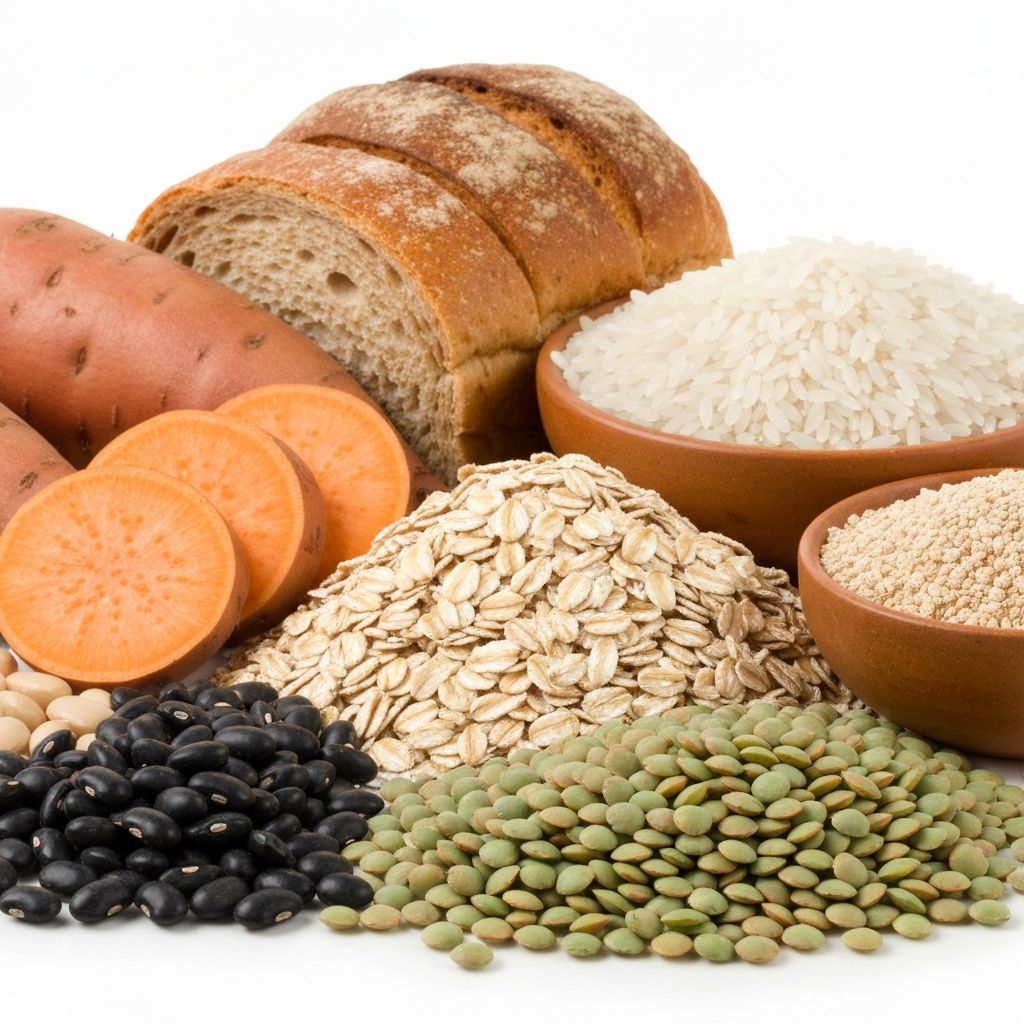
Whole Grains: Oats, brown rice, quinoa, and whole wheat contain complex carbohydrates along with fibre, vitamins, and minerals.
Legumes: Beans, lentils, and peas provide complex carbohydrates along with protein and fibre.
Vegetables: Vegetables contain various carbohydrates, primarily in the form of starch and fibre, along with important vitamins and minerals.
Fruits: Fruits contain simple sugars (fructose, glucose) alongside fibre, vitamins, and phytonutrients.
Refined Carbohydrates: White bread, white rice, and sugary foods contain carbohydrates but lack the fibre, vitamins, and minerals found in whole-grain and plant-based sources.
Fibre and Carbohydrate Quality
Fibre is a type of carbohydrate that humans cannot fully digest. Present in plant foods, fibre affects digestion, satiety, and metabolic health in significant ways. Higher-fibre carbohydrate sources tend to produce slower blood glucose responses, greater satiety, and provide other health benefits.
The quality of carbohydrate sources—in terms of nutrient density and fibre content—influences their overall health impact. Whole, minimally processed carbohydrate sources generally provide more nutrients and fibre than refined carbohydrate products.
Individual Carbohydrate Needs
Optimal carbohydrate intake varies among individuals. Factors influencing carbohydrate requirements include activity level, metabolic health, personal tolerances, and overall dietary pattern.
Different eating patterns (low-carbohydrate, moderate-carbohydrate, higher-carbohydrate) can be equally effective for different people. The most sustainable approach is one that maintains stable energy and satisfactory performance while fitting your preferences and lifestyle.
Educational Context
This article provides general information about carbohydrate types and metabolism. It is not personalised dietary guidance. For recommendations tailored to your individual situation, please consult a qualified healthcare professional or registered dietitian.